
Juvenile Detention Discharge Channels
The county sitemap identifies a Juvenile Detention Center within York County's juvenile-services setting. Its detention function is distinct from the adult county prison and from the Youth Development Center's documented least-restrictive program. The research does not support a public roster, a public release feed, a public contact address, or adult-style release fields for this facility.
Placement or discharge must be confirmed through the authorized juvenile court or referring agency. Counsel can use the court process that applies to the case. A parent, guardian, or other case participant should contact the assigned professional through a verified number or document. Staff may need proof of identity and legal authority before they can discuss a young person's location or transition.
| Information needed | Correct restricted path |
|---|---|
| Detention or placement status | Assigned juvenile agency, counsel, or juvenile court. |
| Discharge authority | Juvenile court order or authorized agency instruction. |
| Transition destination | Case professional coordinating the placement plan. |
| Record access | The process stated by the juvenile court or record custodian. |
Confirm Juvenile Detention Discharge
Start from the case, not from a public adult search box. Identify the court, referral source, counsel, or caseworker already involved. Use official contact information from an order, agency directory, or prior verified communication. State the young person's name only to the authorized professional, and be ready to explain the caller's role.
Ask whether detention changed, what authority controls the transition, and what next steps an authorized participant must follow. The answer may be limited by confidentiality. A staff member's refusal to discuss the matter with an unauthorized caller does not establish whether the young person is present, absent, released, or transferred.
- Locate the juvenile court, referring-agency, counsel, or caseworker information for the matter.
- Use an official channel and establish identity plus authority to receive protected information.
- Request the placement or discharge information needed for case coordination.
- Follow the authorized source's direction for pickup, supervision, services, or another placement.
- Document the source and exact wording without posting protected details publicly.
Adult Searches Do Not Apply
PA SAVIN and VINELink cover participating adult county jail, state prison, and state parole records. PADOC tracks state inmates and state-supervised people. The UJS public portal provides public court dockets within its coverage. None should be described as the public equivalent of a York County Juvenile Detention Center locator.
An absent result has no clear meaning here. It can reflect juvenile confidentiality, the wrong system, spelling, age, or another limit. Adult search results also can belong to a different person with the same name. Do not infer juvenile release, ongoing detention, transfer, or case outcome from a missing or similar adult record.
- Detention
- A restricted juvenile custody setting under the responsible authority.
- Placement
- The setting chosen under a juvenile court or agency plan.
- Adjudication
- A juvenile court finding, not an adult criminal conviction label.
- Discharge
- An authorized end or change in the specific placement.
Note: Juvenile confidentiality is not a data gap that an adult inmate search can lawfully or accurately fill.
Juvenile Detention Record Access
A juvenile record may involve court orders, agency documents, referral information, or discharge instructions. The research provides no public field inventory for York County Juvenile Detention Center. It would be inaccurate to promise a public release date, booking number, charge list, photograph, destination, or schedule.
The record custodian decides access under the juvenile process. Counsel can request or review material through the case. An agency can explain what an authorized parent or guardian may receive. A broad county Right-to-Know request for an adult prison release record is not an alternate path around juvenile restrictions.
Pennsylvania provides an official explanation of criminal and juvenile justice systems that places juvenile channels in context.
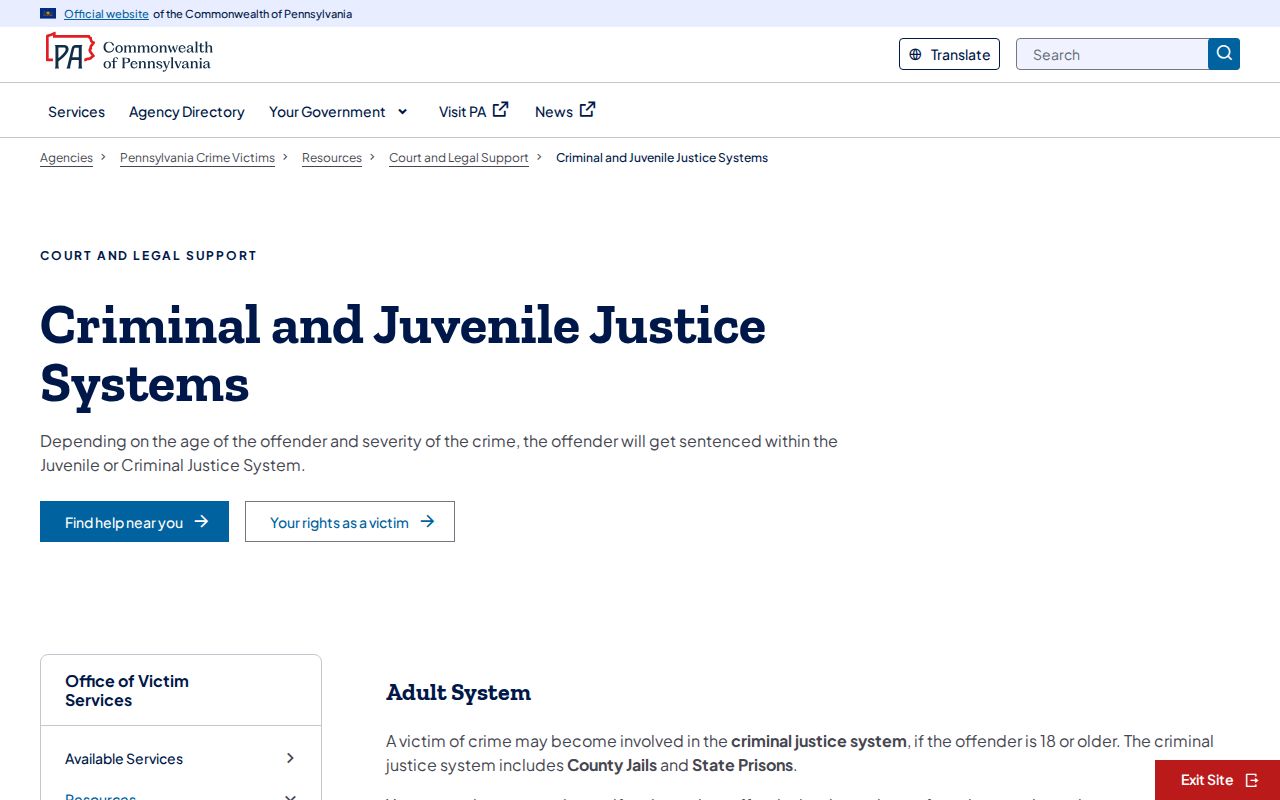
The state capture is expressly assigned to both York juvenile pages and supports the distinction from adult notification systems.
Juvenile Detention Contact Limits
No separate Juvenile Detention Center street address or public telephone number was established in the research. The Youth Development Center address and telephone must not be assigned to this facility merely because both serve juvenile matters. Use the juvenile court, referring agency, counsel, or case document that actually applies.
York County Juvenile Detention CenterCounty of York juvenile-services context
Placement or discharge verification:
authorized juvenile court or referring agency only
That limit is meaningful. Publishing an unverified shared address or number could send a family to the wrong program and might expose protected information. The facility-specific source should control. When no public contact is established, the known case channel is safer and more accurate than guessing.
The York County juvenile program page documents the separate Youth Development Center, not a public Juvenile Detention Center locator.
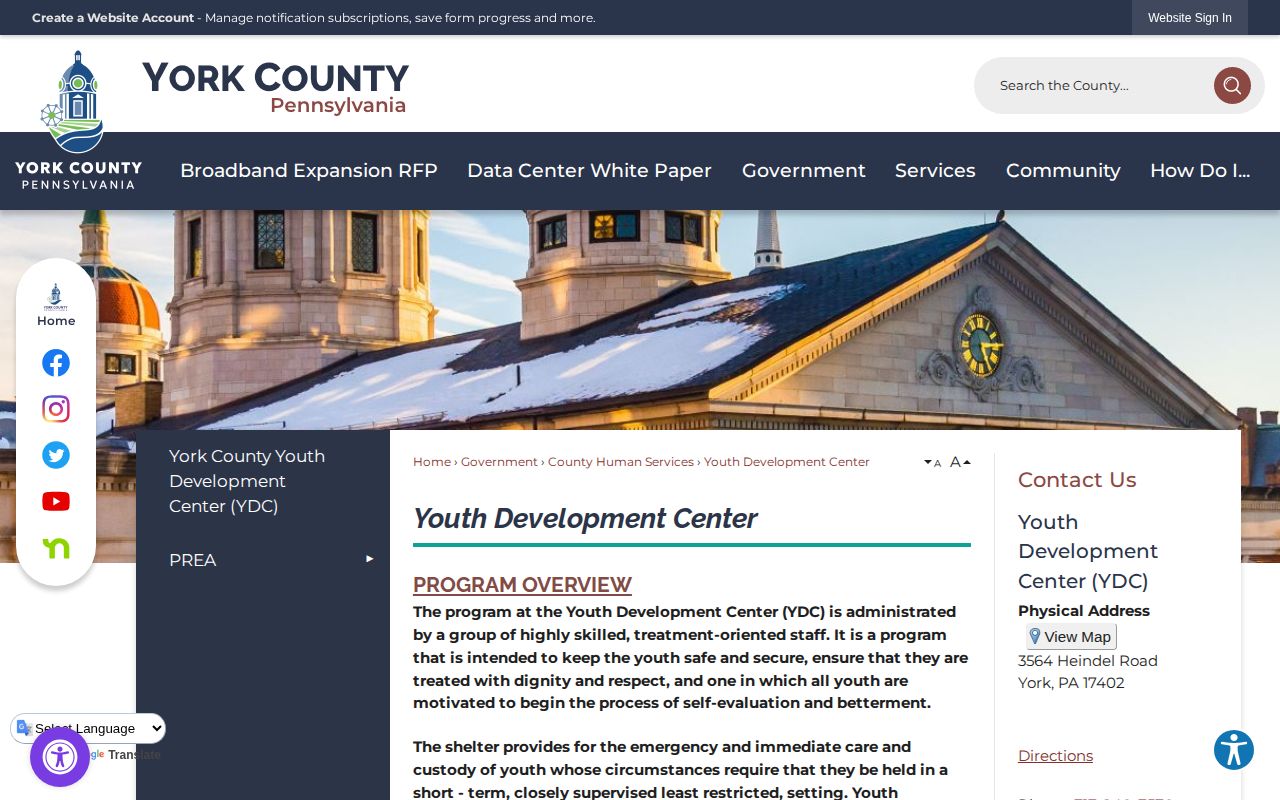
The capture helps show the documented sibling program while the copy keeps its facility type, role, and contact facts separate.
Juvenile Detention Transition Safety
A planned transition may include family coordination, another placement, supervision, or services. The details belong to the young person's authorized plan. Publicly guessing the destination can create harm and may conflict with the court's direction. The responsible case professional should provide pickup instructions, reporting steps, and permitted contacts.
Urgent safety needs should go to the agency, counsel, court, or emergency channel that can act. Refreshing an adult roster is not a safety plan. A public-facing service may lag or omit protected cases, while the assigned authority can see the case context and explain what an authorized person should do.
Keep the language accurate. Say “placement transition” when that is what the authority confirms. Use “discharge from juvenile detention” only when an authorized record supports it. Do not convert a transfer to another placement into community release.
Juvenile Detention Source Checks
Source discipline is crucial when public facts are sparse. The county map establishes a Juvenile Detention Center, but the research does not establish a public adult-style facility page with individual status fields. The shared juvenile sources describe the justice-system context and the separate Youth Development Center. They do not authorize copying the YDC address, phone, age range, or least-restrictive description onto the detention center.
An authorized person should record which office supplied the information and when. Exact wording matters because “transferred,” “placed,” and “discharged” can describe different outcomes. A transfer can move a young person directly into another placement. It is not proof of return to the community. A case professional can explain the approved destination and any conditions that apply.
If two sources appear inconsistent, do not resolve the conflict through public guesswork. Counsel, the juvenile court, or the referring agency can check the current order and case plan. A later instruction may replace an earlier one. The office responsible for the case should confirm the controlling direction.
Juvenile Detention Family Coordination
Family members often need practical facts, such as whether pickup is authorized, where a meeting occurs, or which professional should be contacted next. Those details can be sensitive and can change. Obtain them from the assigned source, confirm the recipient's identity, and avoid sharing them with people who are not part of the case.
No public daily discharge time, visitor route, release gate, property schedule, or transport process was established for this detention center. Do not infer one from York County Prison or Central Processing. Adult facilities have different roles and published procedures. Juvenile transition instructions must come from the juvenile authority handling the specific matter.
Juvenile Detention Record Meaning
A juvenile court order can direct detention, placement, review, or discharge, but the public does not have an adult-style York field dictionary for those records. An agency instruction may address logistics without disclosing the whole case. Counsel can explain how the order and current plan fit together. Describe only the status that the authorized source confirms.
Timing also requires care. No public update cadence or historic detention-release archive was found. A delayed message, lack of a call, or absence from an adult system cannot timestamp a discharge. The authorized office should confirm when a transition took effect and which destination or service it may disclose.
When a young person later has an adult custody matter, keep the records separate. The adult event may appear in York County Prison, PA SAVIN, a public court docket, or PADOC. It does not open the juvenile file or prove the outcome of the earlier detention episode. Each authority should be cited for the record it actually maintains.